
ARTE / ART DIRECTION & MOTION DESIGN · 2025
Darwin Express
Les nouveaux défis de l’évolution
Selected sequences.
FILM
A selection of motion graphics and title sequences from the documentary, created in collaboration with Pôle Nord Studio.
The video could not load. Open this film directly.
THE PROJECT
Evolution,
made visible.
For Darwin Express — Les nouveaux défis de l’évolution, I developed a graphic language that connects Darwin’s world with contemporary biology: engraved illustrations, paper textures, animated collages and a bright yellow thread running through the film.
Brought into the project by Robin Kobrynski at Pôle Nord Studio, I worked with director Elena Sender and producer Sally Blake on the creative direction and production of new animated sequences. My contribution covered the opening titles, scientific explainers, maps and editable on-screen graphics.
- Art direction & motion design
- Raf / Raphaël Mechet
- Studio collaboration
- Pôle Nord Studio / Robin Kobrynski
- Directors
- Elena Sender & Luc Marescot
- Production
- CAPA / Produced by Sally Blake
- Broadcaster
- ARTE
- Format / Year
- Science documentary · 52 min · 2025
01 / THE VISUAL LANGUAGE
A naturalist’s
notebook, in motion.
A wall of maps, portraits and natural-history illustrations becomes a recurring setting. Pins, connecting lines and layered paper turn it into a space for following ideas, moving between places and returning to the film’s central questions.
The same visual vocabulary carries into the explanatory sequences: engraved surfaces, cut-out silhouettes, oversized genetic lettering and yellow highlights. I developed the direction with Pôle Nord Studio, whose existing 3D sequences were adapted by Robin to sit alongside the new graphics.
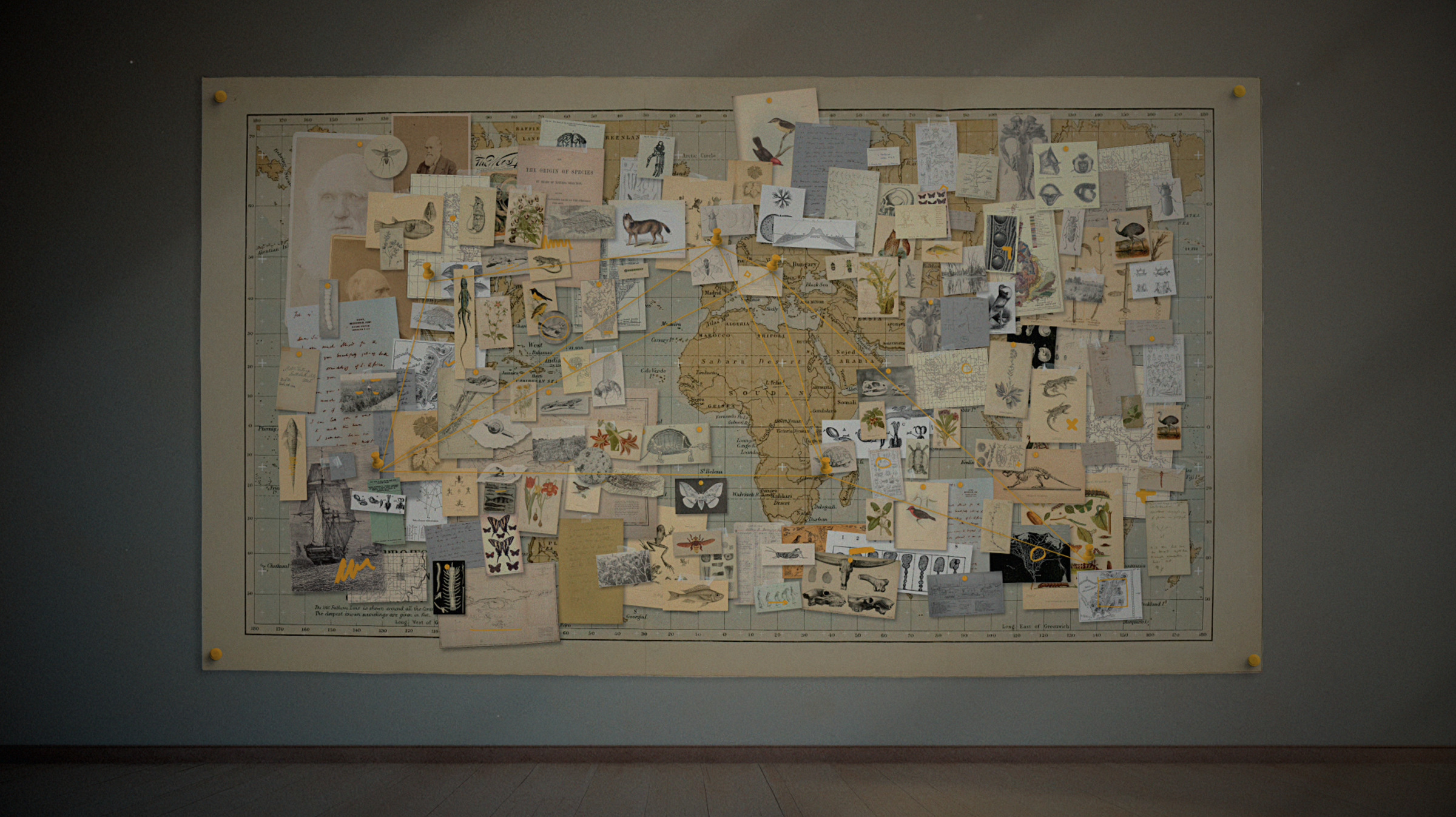
A wall of connections. Maps, specimens and fragments of research form the recurring visual setting.
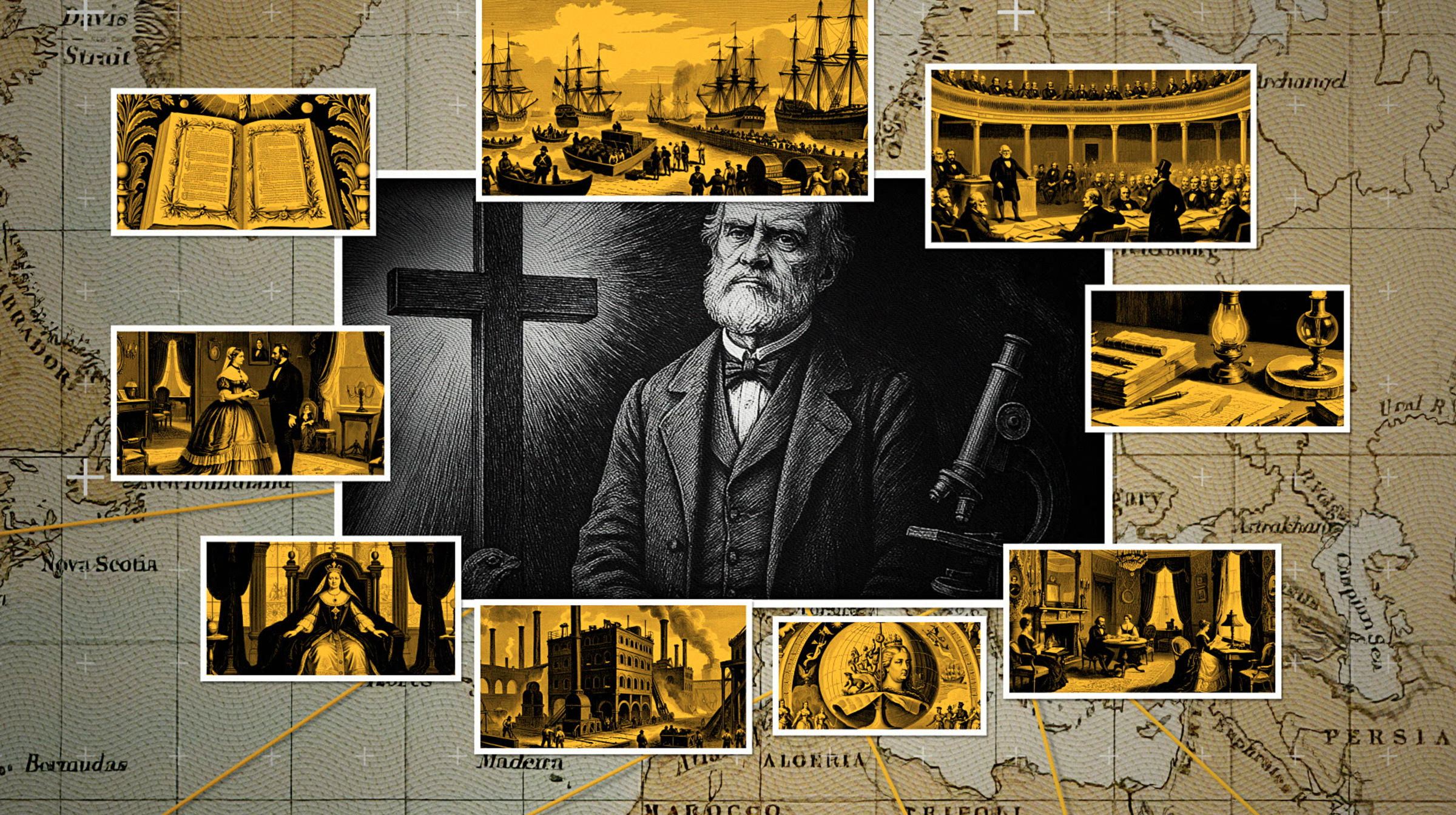
Darwin’s world. A portrait surrounded by illustrated fragments of the nineteenth century.
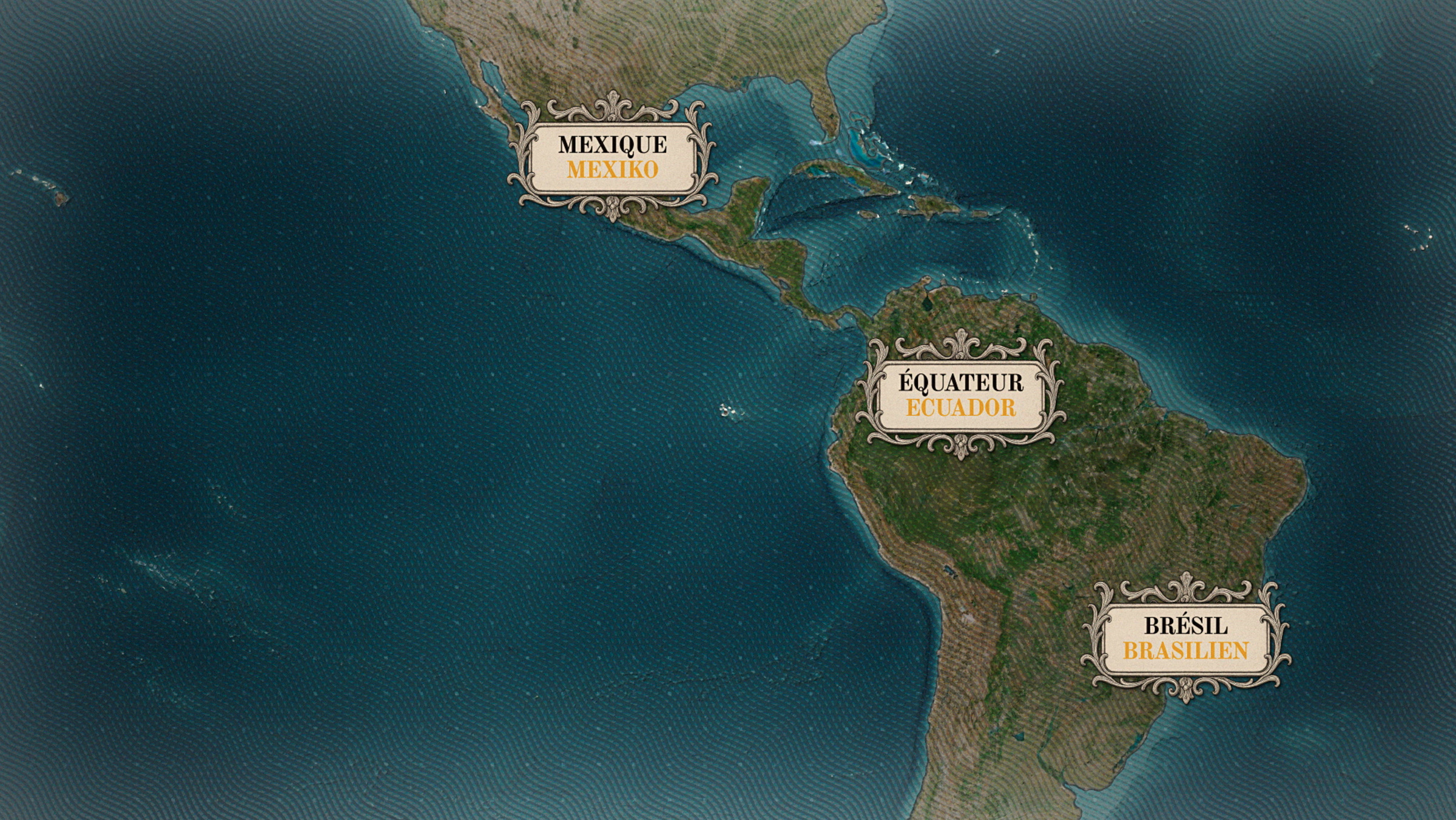
Following the fieldwork. Animated cartography with French and German place names.
02 / SCIENCE IN MOTION
Making the
invisible readable.
The animations translate the narration into visual comparisons: variations between dogs, changes in genetic sequences, flower reproduction and differences within a population of snails. Scale, repetition and colour guide the eye through each explanation.
Working from the evolving edit, I refined the sequences with the director and production team, adjusting timing, emphasis and labels as the film took shape. The workflow combined compositing and motion design with generative AI for selected illustrative elements.
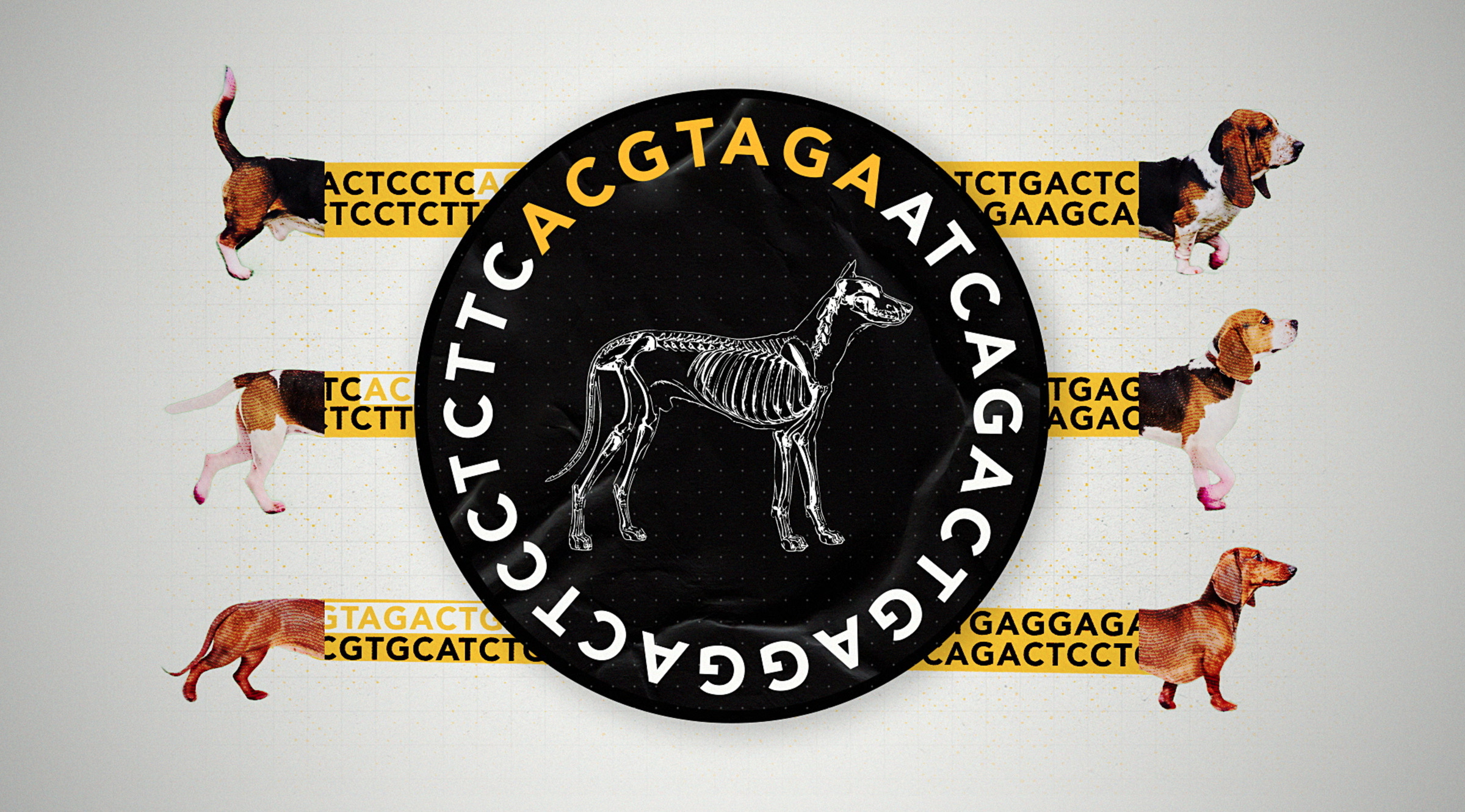
Reading the code. Genetic lettering and anatomical imagery link the visible animal to its underlying structure.
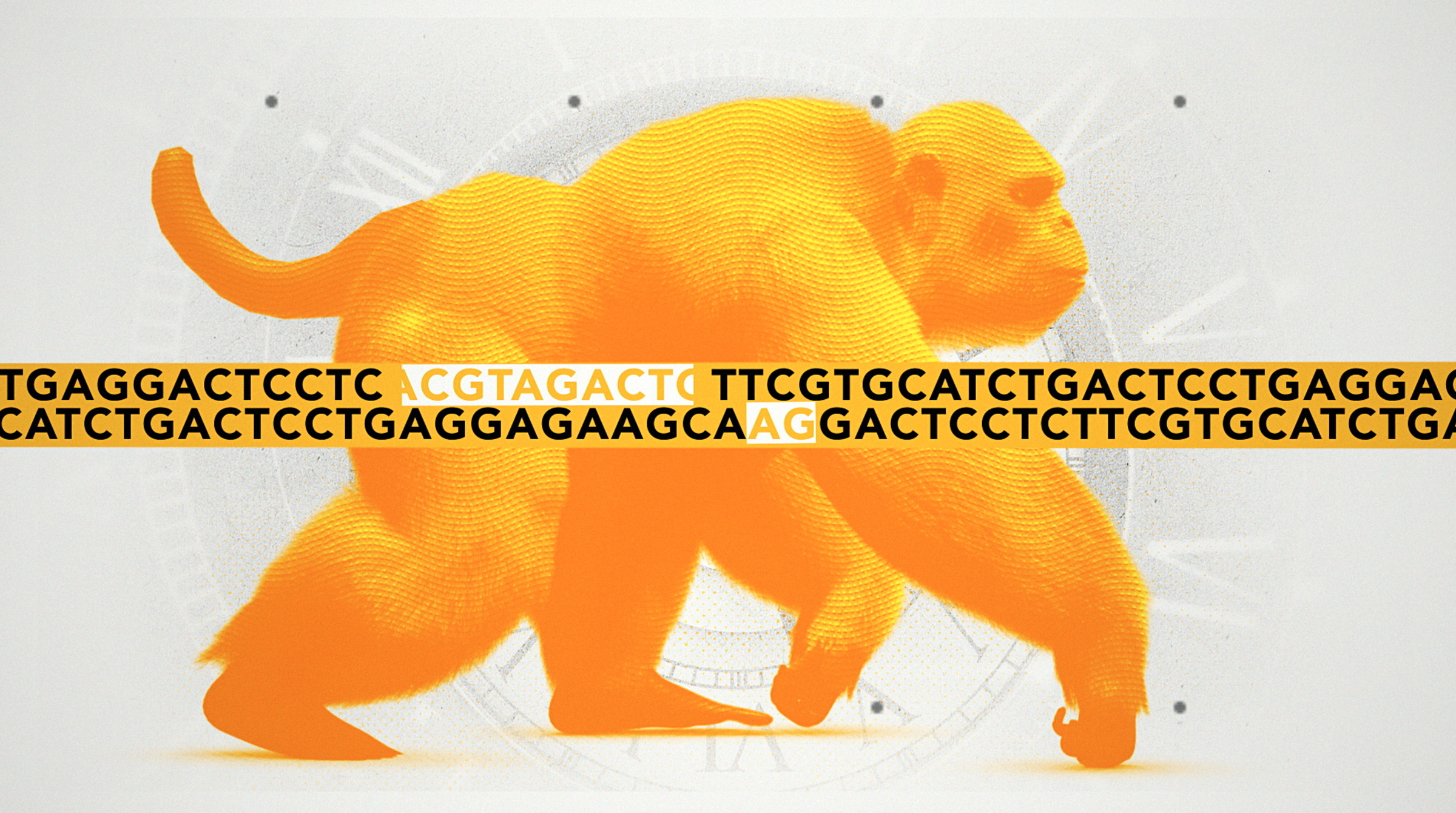
From letters to living things. An enlarged genetic sequence becomes a graphic layer within the animal silhouette.
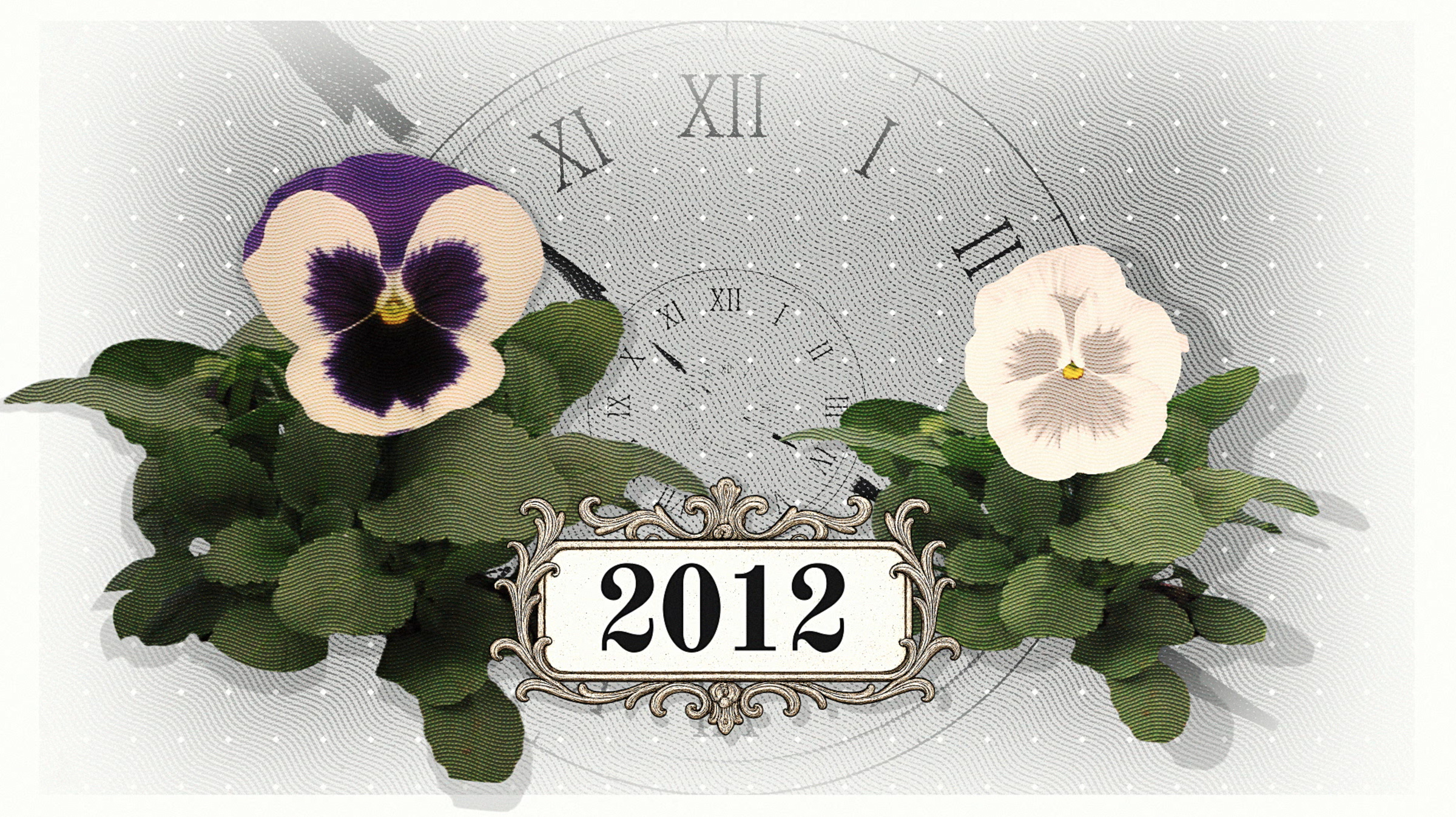
Change over time. Flowers and a clock motif bring the question of evolutionary timescales into the image.
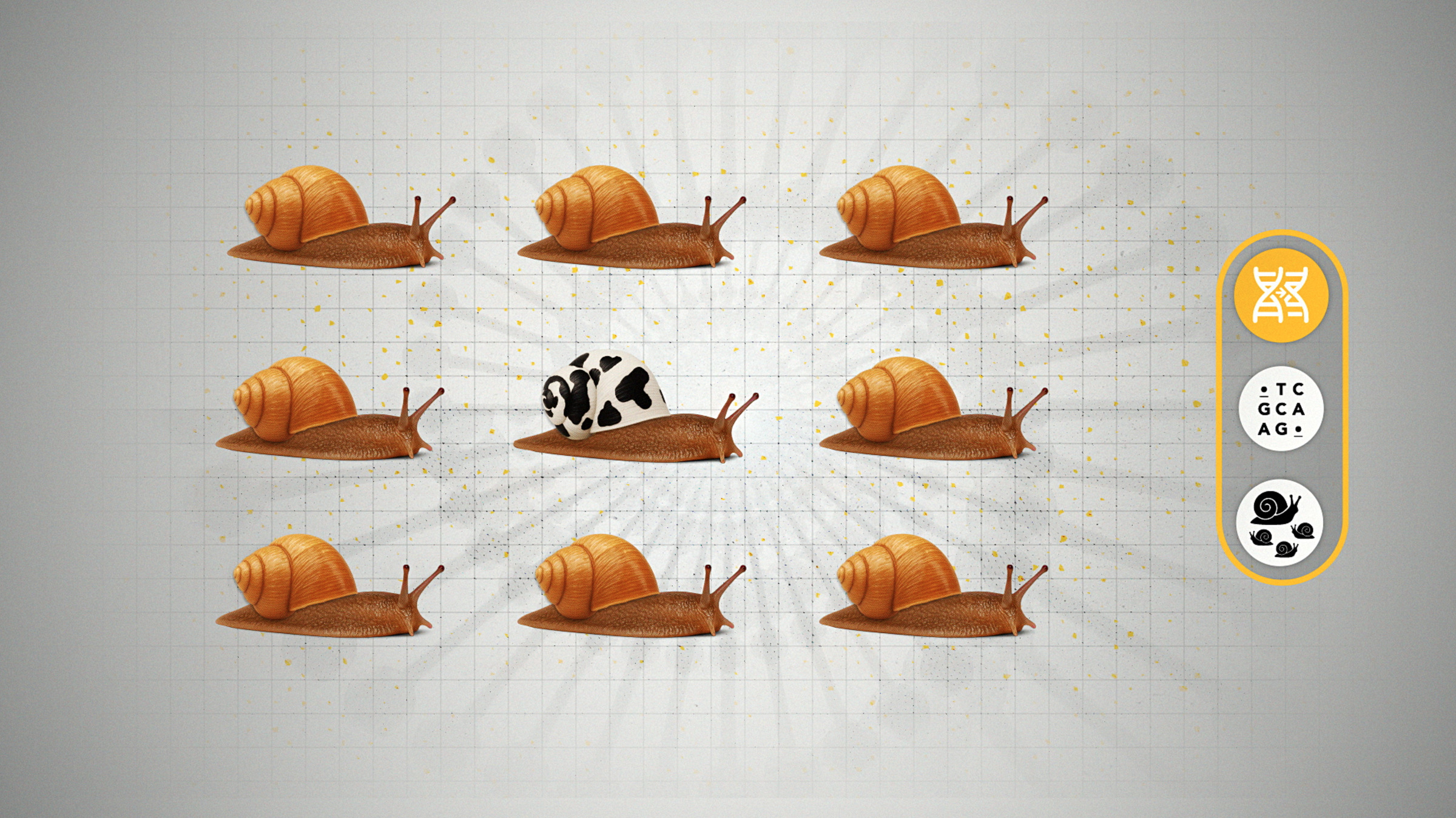
Making variation visible. Repetition establishes a population; a different shell immediately draws the eye.
03 / THROUGH TO DELIVERY
Built for
the edit.
The maps and opening credits were prepared for French and German text. Compositions allowed labels to be revised and animation timings to be extended as the edit and translations were finalised.
I also delivered editable Motion Graphics Templates for Premiere Pro, giving the post-production team control over the on-screen titles and lower thirds.
04 / EARLY RESEARCH · FEBRUARY 2025
Finding the
graphic language.
The first presentation, dated 17 February 2025, explored title treatments, the study-wall setting and a graphic approach to scientific imagery. These two early boards show the typography search and the engraved textures, collage and yellow accents that informed the finished sequences.
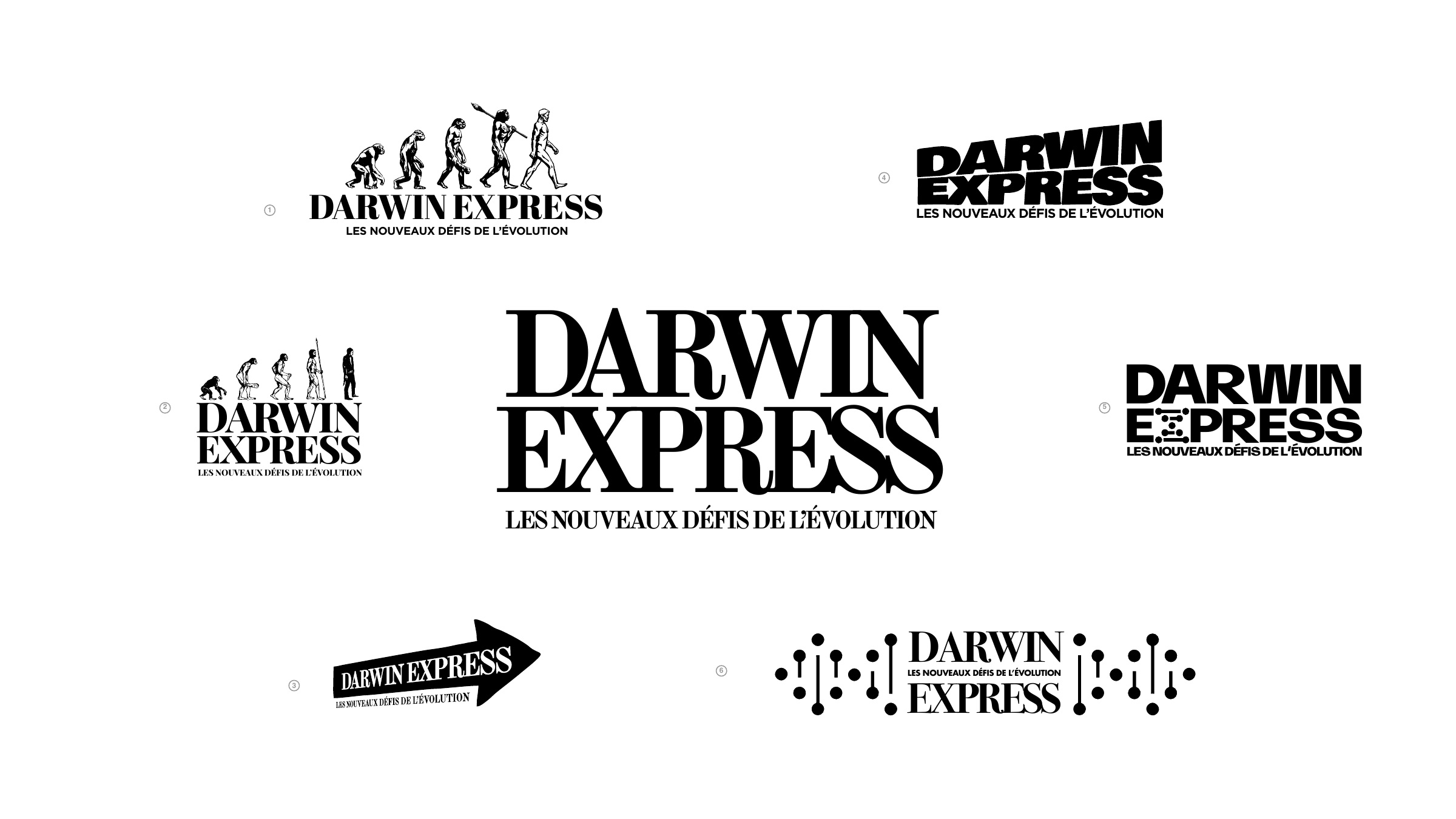
Title exploration. Early identity proposals from the February 2025 presentation.
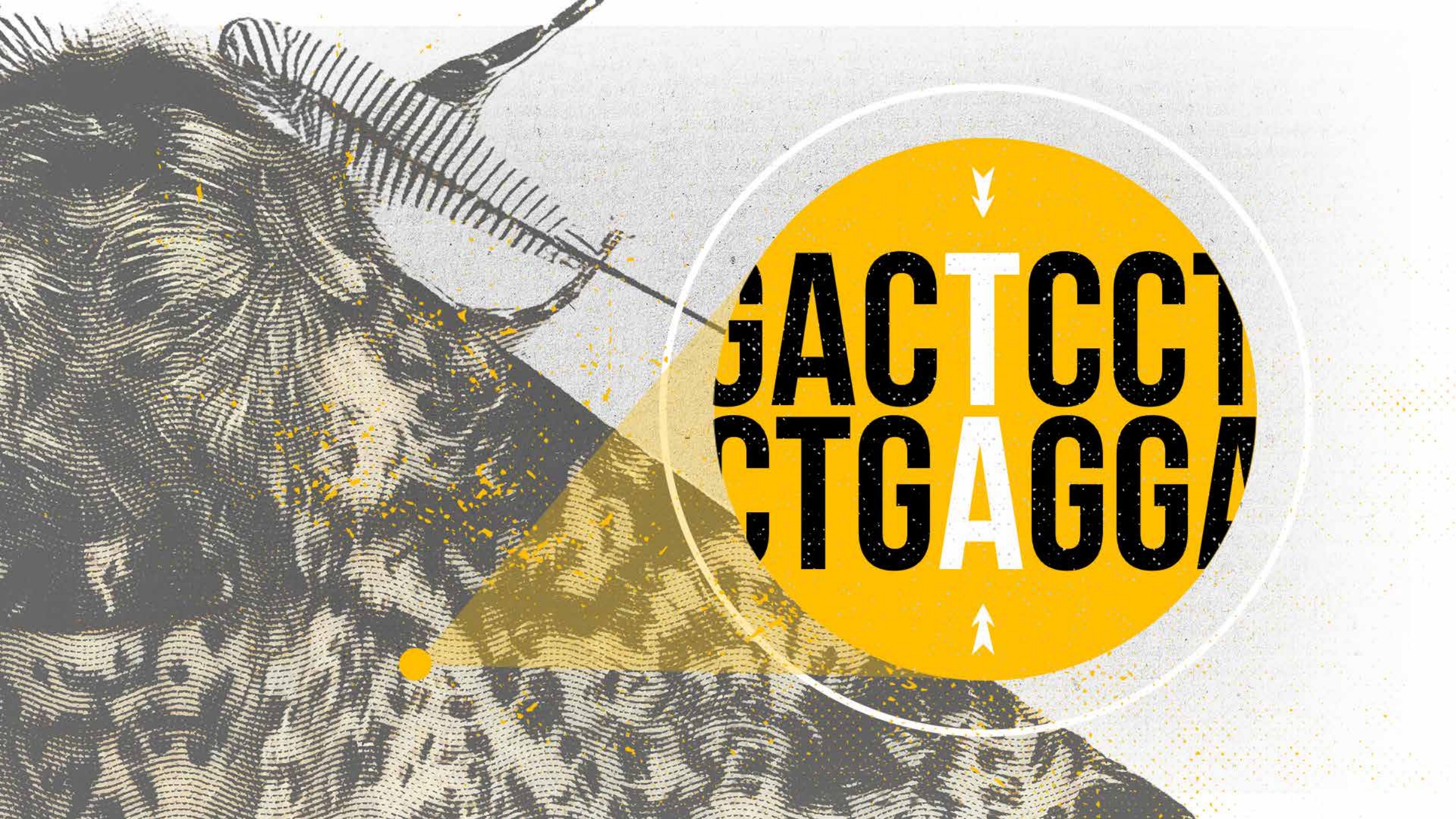
Finding the texture. An early visual study combining engraving, collage, genetic lettering and yellow.